GEAPS Online Learning courses are available anytime on-demand. Each course takes approximately 10 hours to complete and can be completed at any pace over five weeks. Courses must be completed within a five-week period that begins the day you register. After registering, learners will be sent a confirmation email, then you’re ready to start learning!
Cost:
$495 for members $795 for non-members.
Course Description: This course provides fundamental knowledge required to prevent and manage pest infestations using practical non-chemical and chemical methods. Participants will learn about pests associated with grain, methods and devices used in sampling, the overall value of sampling grain, preventive and responsive management techniques and proper use of grain protectant and fumigation.
Course Goals: This course aims to teach basic skills to those involved in handling, storing and processing grains and oilseeds. These skills will enable participants to make timely pest management decisions, while also protecting the quality of stored grain and the environment. By the end of this course, participants will be able to create and evaluate their own pest management plan.
Target Audience: Grain facility superintendents and managers; grain industry professionals who have responsibilities relating to grain quality management, pest management, fumigation and protectants; students and others with a professional interest in managing pests in stored grain.
Instructors:
David Fairfield National Grain and Feed AssociationSee Bio
David Fairfield joined the National Grain and Feed Association (NGFA) in 2001 after spending 20 years managing operations for commercial feed companies. As senior vice president of feed services, he is NGFA’s primary staff person who addresses food and feed safety issues. Fairfield participates as a subject matter expert within a variety of food and feed safety forums, including the Association of American Feed Control Officials, Global Food Safety Initiative, International Organization for Standardization (ISO) and the Food Safety Preventive Controls Alliance. He is a graduate of Kansas State University’s Department of Grain Science and industry.
Matt Frye Cornell UniversitySee Bio
Dr. Matt Frye earned his master’s degree and PhD in entomology from the University of Delaware. He began his career at a top ranked pest control company. As staff entomologist, Frye provided pest identification services, treatment recommendations, field and classroom training, quality audits and inspections, outreach programs, and compliance and regulatory training. In 2012, Frye joined the New York State Integrated Pest Management Program at Cornell University, where he provides education and research on pest management in and around buildings. Frye is a member of the Scientific Coalition on Pest Exclusion (SCOPE) and has published research on rodent ectoparasites and pathogens in New York City.
Chelle Hartzer RollinsSee Bio
Chelle Hartzer, BCE, joined Rollins in 2016 as a Technical Services Manager. In her role, she helps investigate and give recommendations on new products, services and equipment, in addition to providing regulatory oversite for interpreting labels, audit standards and more. She performs research, conducts site visits, and provides information related to identification and education about species, management and biology options. Chelle holds a BS in Entomology with a wildlife conservation concentration from the University of Delaware and a MS in Entomology from Kansas State University.
Jerry Heath The Industrial Fumigant Company, LLCSee Bio
Jerry Heath received a Bachelor of Science in entomology from Washington State University. As a product manager and entomologist at The Industrial Fumigant Company, he is involved with product marketing and technical services for the food processing and commodity industries. Previously, he worked on insect growth regulators and pheromone mating disruption products for stored grain pests. Heath has worked in the industry for more than 19 years.
James Miller Trécé IncSee Bio
James Miller is the market manager for STORGARD® Insect Monitoring and CIDETRAK® Mating Disruption systems to the Post-Harvest Professional Pest Management Industry with Trécé Incorporated. Miller has more than 15 years of practical field experience and is a certified licensed commercial pesticide applicator and an associate certified entomologist. He is a member of the International Association of Operative Millers, Grain Elevator and Processors Society, National Pest Management Association, Entomological Society of America, Australian Environmental Pest Managers Associate and various State-run Pest Management Associations. His heavy involvement and past experiences allow him to share his expertise and knowledge with others.
Peter Mueller Fumigation Service & SupplySee Bio
Pete Mueller is the regional manager for Fumigation Service & Supply, Inc. servicing central and southern Illinois. Mueller has extensive technical experiences in facility fumigation that he gained during the time of development and implementation of alternatives to methyl bromide. He was actively involved in the quality fumigations conducted in central and southern Illinois and facility inspections by FSS. The majority of his work has been in facilities such as seed warehouses and production plants, grain elevators and bins, quatrain and pre-shipment treatments, and food and feed facilities. Mueller graduated from Purdue University with a focus on how to protect agricultural commodities. His diverse insight and unique perspectives allow him to share his experiences and educate others.
Tom Phillips Kansas State UniversitySee Bio
Dr. Tom Phillips is professor of entomology at Kansas State University where he shares the Don Wilbur Endowed Professorship for Stored Product Protection. Phillips received a B.S. in biology and a M.S. and Ph.D. in entomology. Prior to KSU, Phillips held positions at the University of Florida, the USDA ARS, and Oklahoma State University. He is currently the stored products subject editor for the Journal of Economic Entomology, and he serves on the permanent committee on the International Conference on Controlled Atmospheres and Fumigation in Stored Products. He has published more than 140 peer-reviewed journal articles, along with book chapters and several popular press articles on his research. Phillips also trains graduate students, postdoctoral scientists and visiting researchers in his lab.
Forrest E. St. Aubin BCESee Bio
Forrest St. Aubin, a Board Certified Entomologist, has spent many years in various research and marketing positions in the pesticide chemical industry. He is a multi-year member of the Entomological Society of America. Forrest is a past member of the Board of Directors of the National Pest Management Association (NPMA), the Board of Directors of the Chemical Specialties Manufacturers Association, and Chairman of the Food Protection and Sanitation Committee.
Al St. Cyr ASC Consulting, LLCSee Bio
Al St. Cyr is the president of ASC Consulting, LLC with a focus on successful Proactive Preventive programs. ASC provides educational opportunities for food industries and pest management firms to remain compliant with regulatory requirements and customer expectations. In addition, St. Cyr is also the head of food safety education at the American Institute of Baking. He has been in the industry for more than 29 years.
Dr. Bhadriraju Subramanyam Kansas State UniversitySee Bio
Dr. Subi has expertise in applying integrated pest management principles for the protection of dry, durable commodities and their products. He joined Kansas State University in 1999 and immediately began an applied research program in the ecology and management of insects in stored grains both on farm and milling facilities.
Hank WentworthSee Bio
Hank Wentworth was the district manager of the Delta District at Food Protection Services where he has worked since 2014. Prior to his position with the Food Protection Services, Wentworth started his fumigation career fumigating containers, hoppers, box cars, and small clean rice bins. He took on several roles including joining the sealing team, joining the sanitation department, and later getting promoted to sanitation director where he oversaw the structural fumigations for mills at 3 different sites. Additionally, he has been a GEAPS member since 2014 and participates on the fishing tournament committee.
The Course of Study
WEEK 1Details
Lesson 1: Overview
An introduction to Integrated Pest Management (IPM) and how this course will help provide the resources needed to create and implement an IPM plan.
Lesson 2: Identification
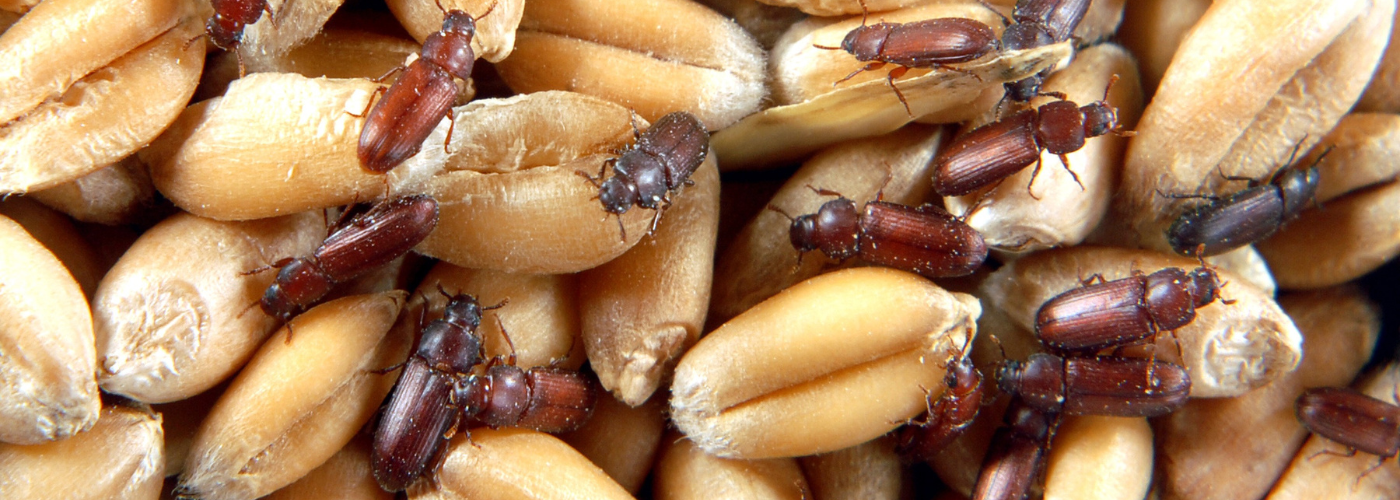
Identification is the first step in creating an IPM plan. Ifco you don’t know what you are dealing with it, how can it be managed? This section will cover the basics of identification and how to tell the species apart, looking at the following:
Each section will cover the most seen insect pests in the grain industry, signs of damage and process for identification as well basic biology (lifespan of adults, reproduction, differentiating characteristics, feeding preferences, temperature requirements, etc.).
Vertebrates
Basic Identification
Birds
Mammal
Each section will cover the common pest species in the grain industry, indications or conducive conditions related to the pest and process for identification as well basic biology.
Developer: Peter Mueller, insects; Jerry Heath vertebrates
WEEK 2Details
Lesson 3: Preventive Control
Inspections are a key component in early identification of potential issues. This section will cover self-assessment and suggest the appropriate tools for a self-assessment program. Tools include: flashlight, plan on where to look, what senses to use (smell), and identification of secondary and conducive conditions caused the pests. Developer: Chelle Hartzer
Lesson 4: Monitoring and Trapping
Monitoring is used to determine pest activity and overall progress of an IPM plan. It can also be a way to identify issues early and mitigate infestation/damage.
This section will cover the who, what, when, where, why and how of trapping and monitoring. Also, once the information has been collected, how to analyze and utilize it. Developer: James Miller
WEEK 3Details
Lesson 5: Sanitation
Sanitation is not only essential to a pest management program, it can increase effectiveness of a program. This section will cover basic sanitation principles using real-world examples inside and outside of a facility, as well as best practices, including sanitation tools used by the industry. Developer: Al St. Cyr
Lesson 6: Design and Exclusion Principles
When looking at design and exclusion principles this can include equipment, maintenance issues, equipment that has been decommissioned, as well as how to manage the design of a facility to control pests. Developer: Matt Frye
WEEK 4Details
Lesson 7: Chemical Management
Once identified, there are several ways to mitigate pests in a facility. This section will cover the chemical options. You’ll learn about the different categories of pesticides, formulations and applications. General overview of fumigation including three main fumigants of methyl bromide, sulfuryl fluoride, phosphine plus safety measures. Chemical management of pests within grain structures and transportation containers will be described. Developers: Hank Wentworth, fumigation; Forrest E. St. Aubin and Dr. Bhadriraju Subramanyam (Dr. Subi), grain protectants
Lesson 8: Other Management Options
This section will address some of the non-chemical and low-impact responses to pest issues including modified atmospheres, packaging and biologically-based options.
Physical controls:
aeration
extreme temperatures
effective packaging
Biologically-based controls:
controlled atmospheres
pheromones
repellents
insect growth regulators
Developer: Tom Phillips
WEEK 5Details
Lesson 9: Regulatory
The regulations relating to pest management in the food processing and storage industry have changed over the years. This section will cover many of those changes as well as resources on where to find the most recent applicable regulations. In addition, this section will cover FSMA, audit standards and record keeping. Developer: David Fairfield
Lesson 10: Closing
Tying it all together. How to use all the tools to put together a plan.