GEAPS online courses are available anytime on-demand. All GEAPS members have automatic and complimentary access to the 3-hour Entry Level Safety course in their online learning center. Nonmembers may purchase this course After purchasing, learners will receive a confirmation email with instructions for accessing the course. All learners will retain access to this course indefinitely.
Cost:
Complimentary for members $795 for non-members.
Course Description
Grain elevators and storage facilities are among the most hazardous work environments in agriculture and bulk material handling. From engulfment and falls to dust explosions and equipment-related injuries, risks exist in everyday tasks — especially for those new to the industry.
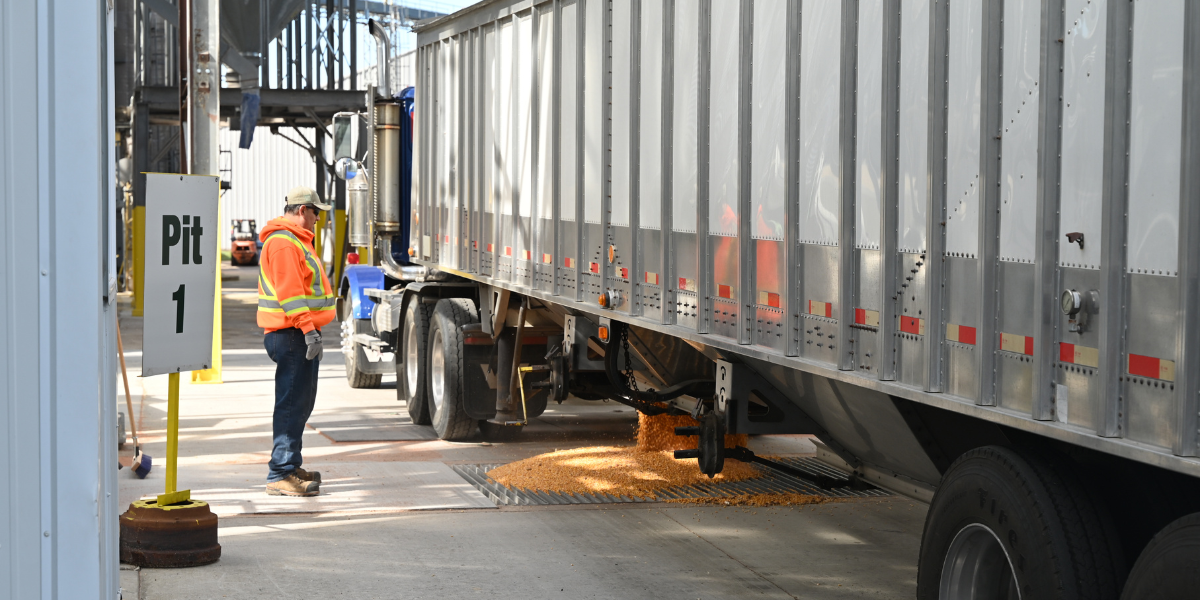
Using a realistic, task-based journey, learners follow the experience of a new employee during a typical workday. Along the way, they encounter common situations such as cleaning pits, working around equipment, entering work areas, and responding to unexpected events. Each scenario introduces real hazards and reinforces the actions that prevent incidents and reduce risk.
Three hours is the recommended time to complete this course. This course does not replace site-specific training. Instead, it builds the awareness, judgment, and safety mindset that entry-level workers need before and during hands-on training at their facility.
Developed with Support from the GEAPS Foundation and Industry Donors
Target Audience:
Entry Level Safety is a foundational eLearning experience designed specifically for individuals beginning work at a grain storage site. Rather than focusing on rules alone, this course helps learners understand why the environment can be dangerous and how their everyday decisions directly impact safety — regardless of job title.
Subject Matter Experts:
Scott Biel Mid Kansas Cooperative (MKC)See Bio
Scott Biel serves as Director of Safety at Mid Kansas Cooperative (MKC). He and his team are responsible for regulatory compliance, employee safety training, and maintaining safe working environments across MKC facilities.
Scott is actively involved in industry education efforts and serves on both the GEAPS Education Planning Committee and the GEAPS Education and Training Committee, supporting the development of learning resources that strengthen safety and operational practices across the grain industry.
Ryan Brooks The DeLong Company, Inc.See Bio
Ryan Brooks serves as Safety Director at The DeLong Company, Inc., where he leads the development, implementation, and management of workplace health and safety policies and procedures. His role includes conducting safety inspections and audits, evaluating regulatory compliance, coordinating annual employee safety training, and establishing SMART goal initiatives designed to reduce risk and prevent accidents across the organization.
Ryan brings 18 years of experience in the agriculture industry, with the past seven years focused specifically on safety leadership. He is an active member of the Wisconsin Agri-Business Association Safety Committee, contributing insight and direction to support industry-wide safety programming. His professional expertise includes facility audits and food safety systems.
Ryan is a Certified Safety Professional (CSP) through the Board of Certified Safety Professionals and has completed the OSHA 30-Hour Compliance Course. He also holds certifications in Implementing SQF Systems Training (SGS) and HACCP (Kansas State University). Ryan earned a Bachelor of Arts in Computer Science with Business Administration from Aurora University.
Dr. Carol Jones, PE Oklahoma State University See Bio
Dr. Carol Jones, PE joined the Biosystems and Agricultural Engineering faculty at Oklahoma State University in 2002 following an extensive career in production agriculture and materials handling design. She recently retired from her full-time professorship and now serves as an instructor with OSU’s Fire Service Training Grain Entrapment Rescue program.
Dr. Jones is the owner of CL Jones Consulting LLC, where she provides grain handling and storage engineering, training, and forensic services. Her career combines academic expertise, industry experience, and hands-on training focused on improving safety and performance in grain handling and storage operations.
Beth Locken Wilbur-EllisSee Bio
Beth Locken serves as Sr. EHSS, DOT Director at Wilbur-Ellis. She brings more than 18 years of experience in the safety and environmental field, including 14 years focused specifically on the grain, agronomy, and energy industries. Beth has specialized expertise in confined space entry and has served on Agtegra Cooperative’s High Angle Rope Rescue Team, supporting local emergency response efforts during grain bin entrapment incidents.
With a strong belief that employees and customers are at the center of safe operations, Beth and her team have dedicated significant effort to educating farmers and member-owners on safe work practices, the reasons behind safety requirements, and how to make safety personal and meaningful. She has been a GEAPS member for 10 years and has served on both the Education Planning Committee and the Membership Committee.
Butch Hendrix Kokomo Grain Co., Inc.See Bio
Butch Hendrix serves as Corporate Safety Director for Kokomo Grain Co., Inc. He has decades of experience in safety leadership across a wide range of roles, including crane operator, welder, general utility worker, global EHS auditor, contractor and construction safety lead, and serious injury and fatality investigator.
Hendrix studied Criminal Justice and Fire Sciences at the University of Illinois and has completed numerous OSHA courses. In addition to his corporate safety role, he is a trainer with the Grain Handling Safety Coalition and has served as a volunteer fire chief for more than a decade. His extensive emergency response background includes serving as a Haz-WOPER incident commander and trainer, DOT hazardous materials trainer, police officer, technical rescue specialist and trainer, and high-angle, confined space, and grain bin rescue team leader and trainer in industrial, urban, and wilderness environments. He has also contributed to the development of agricultural rescue and response standards in Illinois and Indiana.
The Course of Study
Course StructureDetails
The course uses a journey-based structure rather than a traditional chapter-by-chapter format. Learners move through situations that mirror real entry-level tasks and environments. At each point, they recognize hazards, choose preventative actions, and explore safe responses during incidents.
Interactive scenarios, decision points, and feedback help learners practice making safety decisions in context — not just recalling information. The emphasis is not on time passing, but on tasks encountered and the safety implications of those tasks.
Course TopicsDetails
Content:
– Personal Protective Equipment (PPE)
-Walking & Working Surfaces
-Housekeeping
-Dust Explosion Prevention
-Hazard Communication
-Emergency Action Plans
-Lockout/Tagout (LOTO)
-Maintenance Awareness
-Hot Work
-Fall Protection
-Permit-Required Confined Spaces (PRCS)
-Contractor Safety
-Grain Quality (introduced in context of safe handling and storage awareness)
Course OutcomesDetails
Content:
By the end of the course, learners will be better able to:
• Appreciate the hazards present in grain storage environments
• Identify preventative actions that reduce the likelihood of injury and incidents
• Recognize safe responses during emergencies and unexpected situations
Most importantly, learners leave with the understanding that safety at a grain facility is not someone else’s responsibility — every person on-site plays a role.
This course sets the stage for site-specific training by developing the awareness, decision-making habits, and safety mindset that entry-level workers need to work safely in one of the industry’s most demanding environments.